
2025 Cover Crop Study Summary
Bill Brinkley and Craig Givens
University of Kentucky, Lexington
During the fall of 2025, random small plots of cover crops were seeded into standing double crop soybeans to evaluated emergence and winter survival of different types of cover crop species.
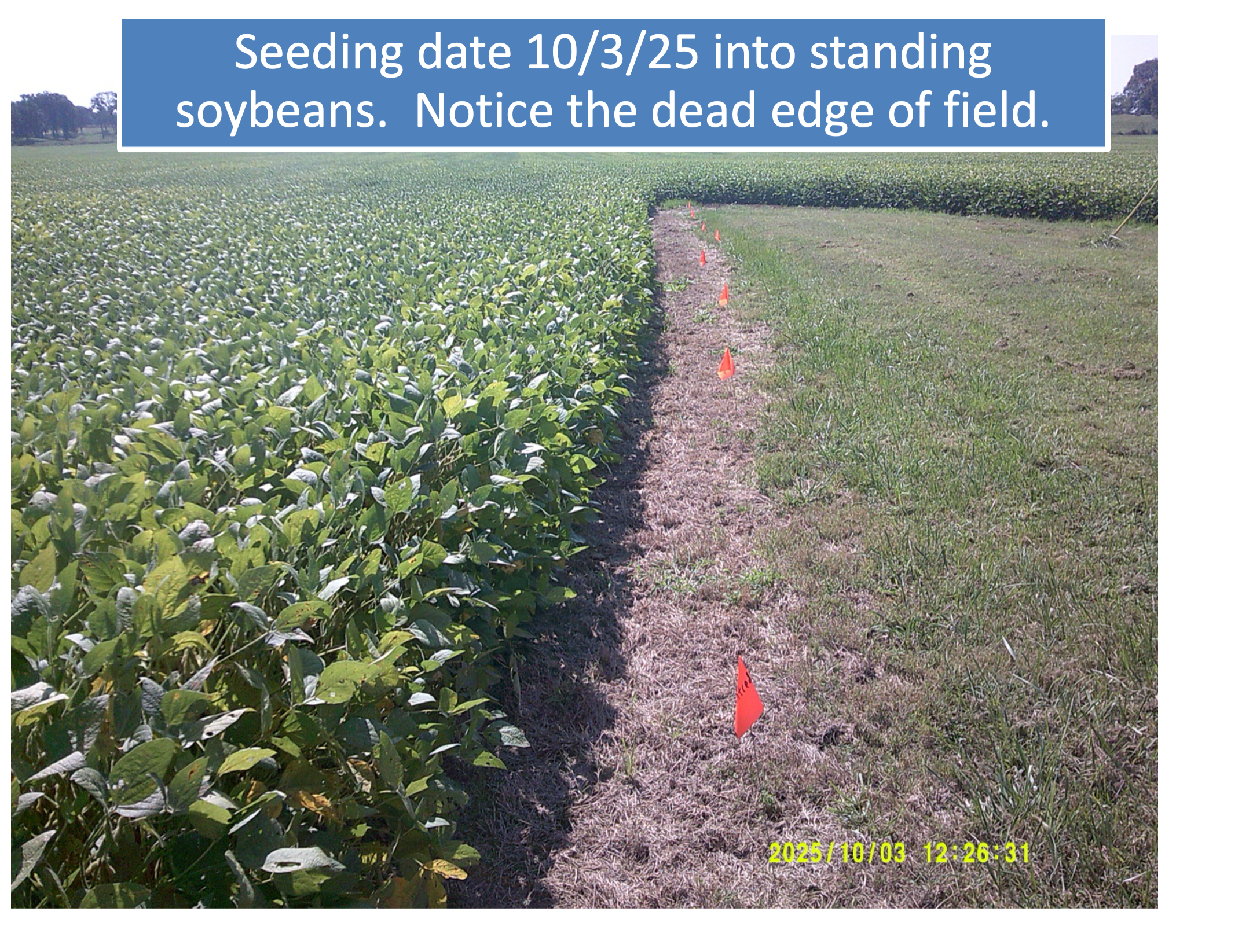
The seeding dates ranged from September 29th up until October 17th. This is later than what is ideal for many of the cover crop species, but is the typical date range when you might expect to seed into standing double-cropped soybeans. Our biggest question concerned whether seeds would emerge and survive the winter and make adequate growth prior to termination in the spring. Termination normally occurs around mid-March in Western Kentucky in preparation for corn planting. All cover crop seeds were broadcast over the top of standing soybeans and on a couple of sites after full-season soybean or corn harvest.
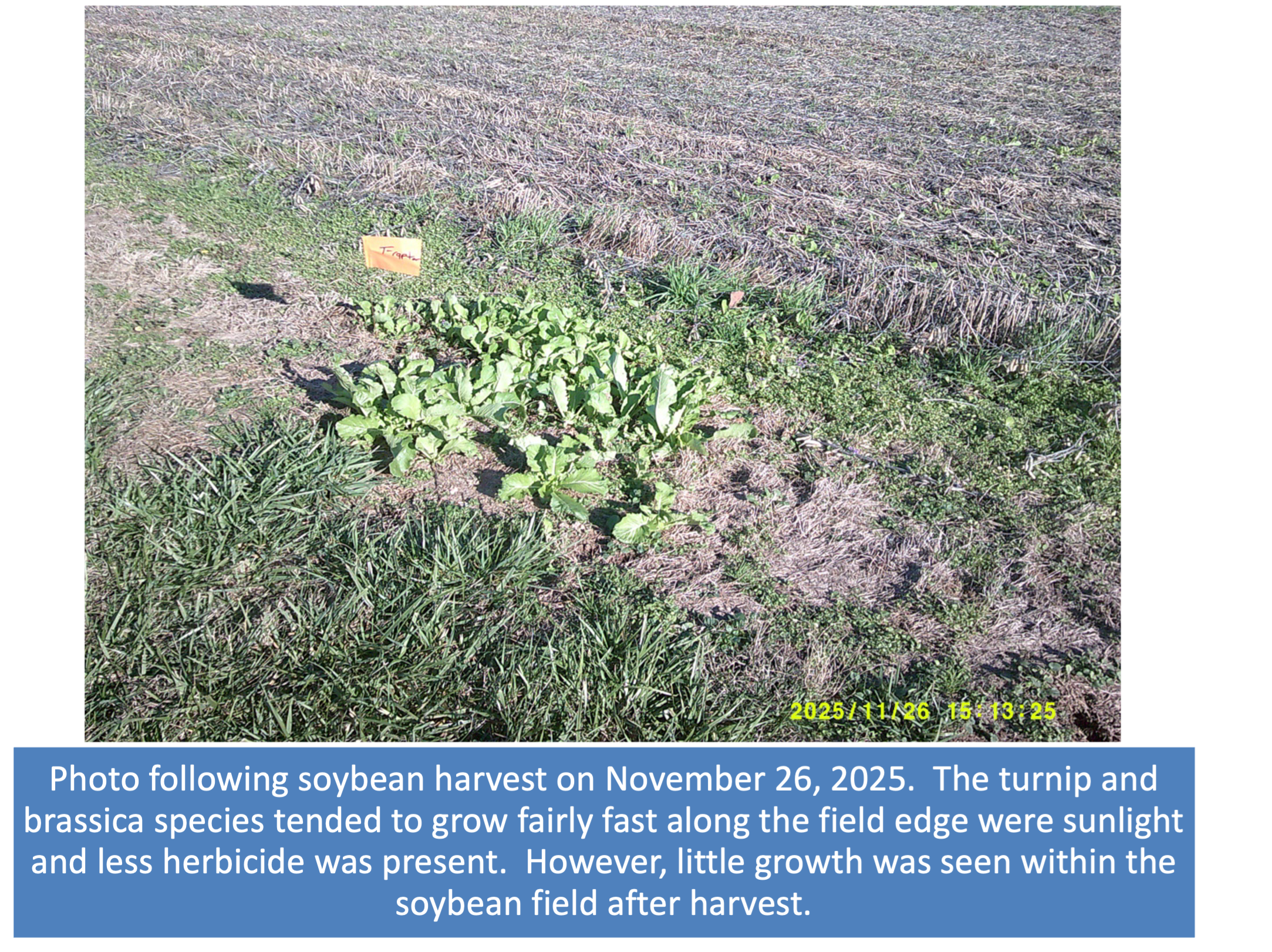
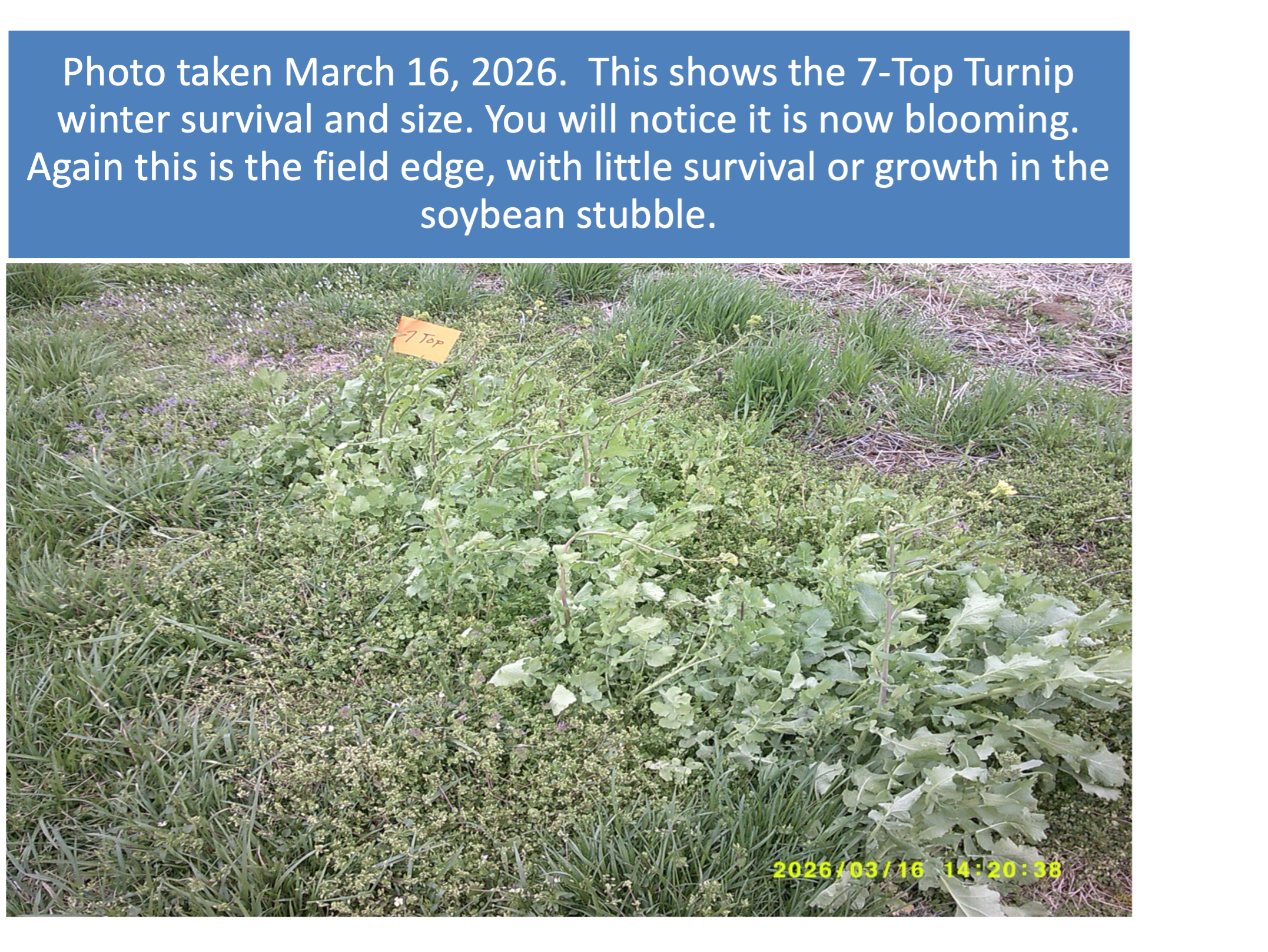
It is proven fact that earlier seeding dates has a huge impact on the growth rate and winter survival of many of the selected cover crop species. However, seeding into standing soybeans must be attempted as the soybean leaves begin to yellow. This normally places the seeding date at late September to early October. When seeding is attempted too early in the growing season, the cover crop species struggle to get enough sunlight through the soybean canopy to continue to grow after germination. Great improvements in cover crop stand quality and winter survival can be made with earlier seeding dates where adequate light is available for the new seedlings. Many of the photos demonstrate cover crop improved growth activity along field edges outside of the soybean canopy area where light is much improved.
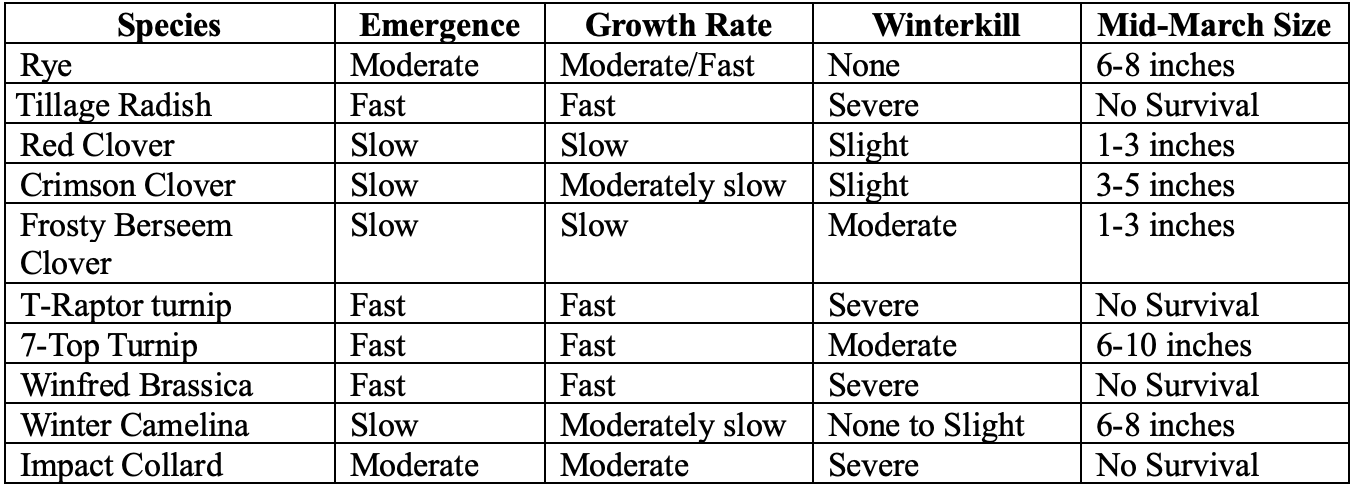
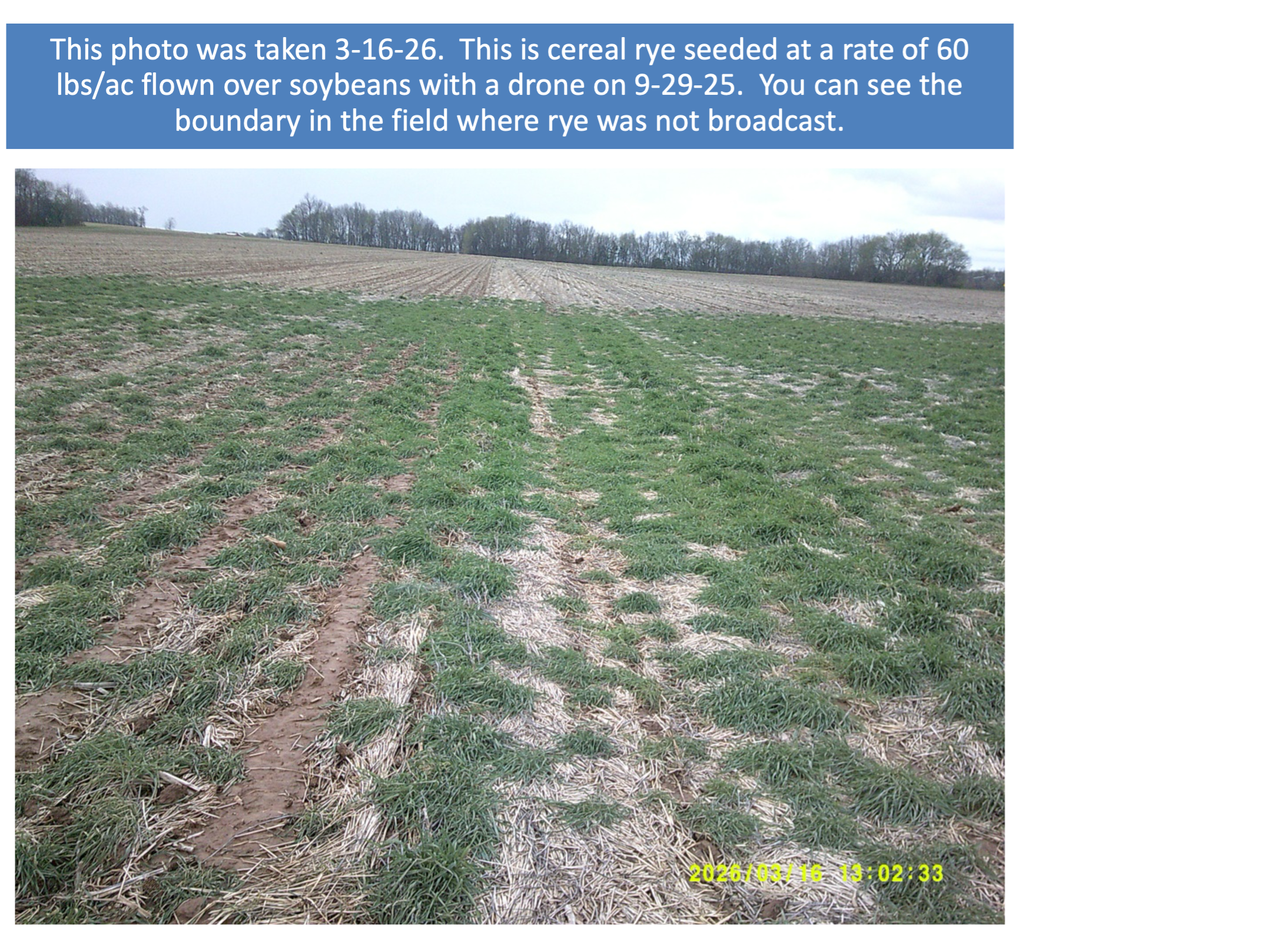
Concerning the initial emergence, most seedlings were slow to establish in the standing soybeans. The Turnips and Brassica were first to emerge and grew quickly where shade was not a factor. Turnips and brassicas are intolerant of broadleaf herbicide carryover and we believe this may have impacted their survival in the double cropped soybean fields. None of the sites had satisfactory stands of these after the harvest of soybeans. Most of the cover crop species had died between germination and soybean harvest. This was either the result of shading from the soybean, herbicide carryover, or from freezing temperatures while the plants were still small. Rye, on the other hand, established well and continued to grow through the fall and winter months when seeded at these dates. This small grain grass species along with wheat, barley, and winter oats seem little impacted by the previous herbicide treatments and/or freezing weather conditions going into winter.
All clover varieties were much smaller and slower growing than the brassicas or grasses. They stayed close to the ground and provided limited ground cover through the winter months. It appears most of their growth occurred with the spring warm-up. Since herbicide spraying usually takes place around mid-March, these clover species were still fairly small and of questionable benefit when terminated. Their benefit would be much improved with a later termination date.
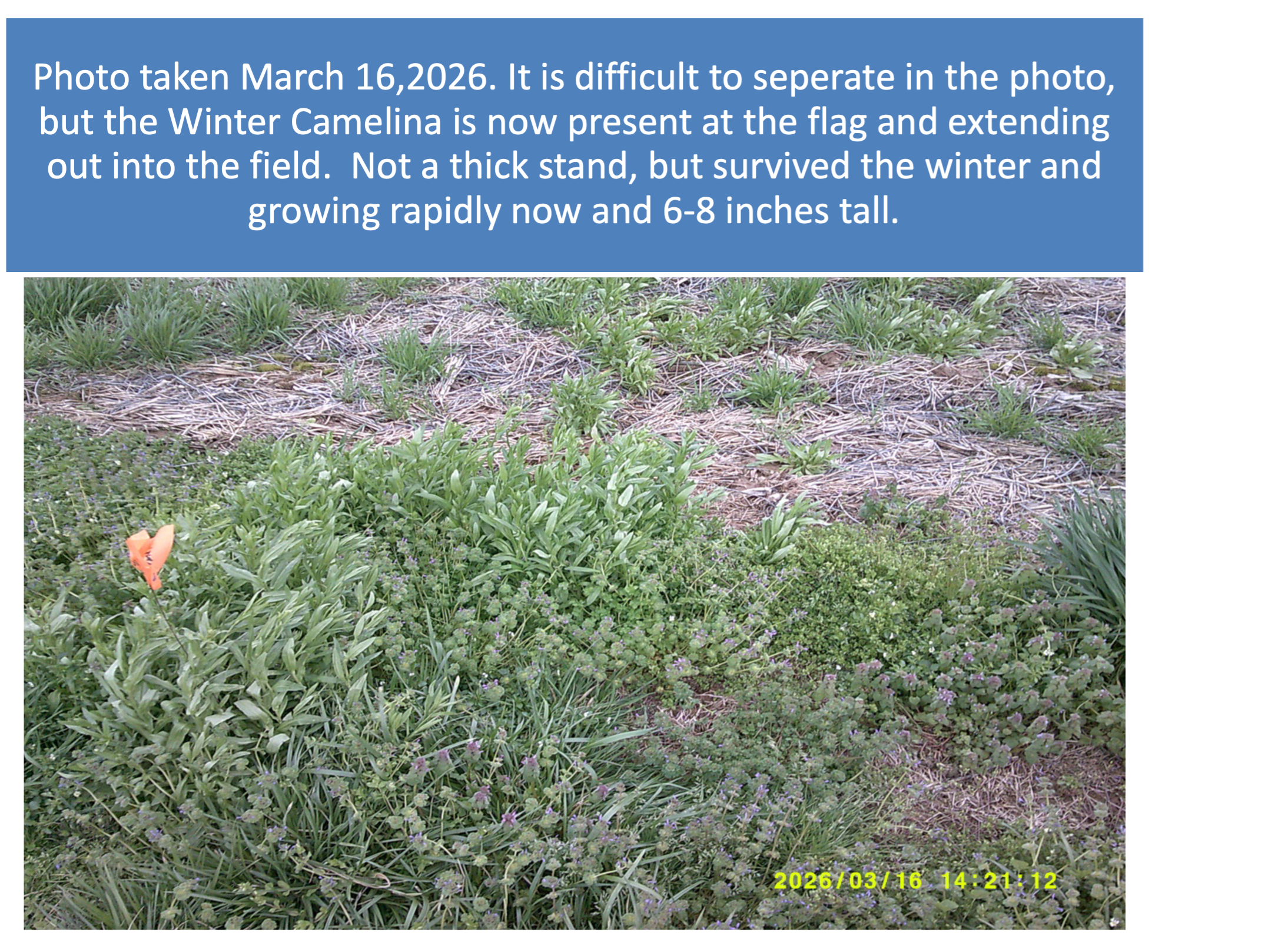
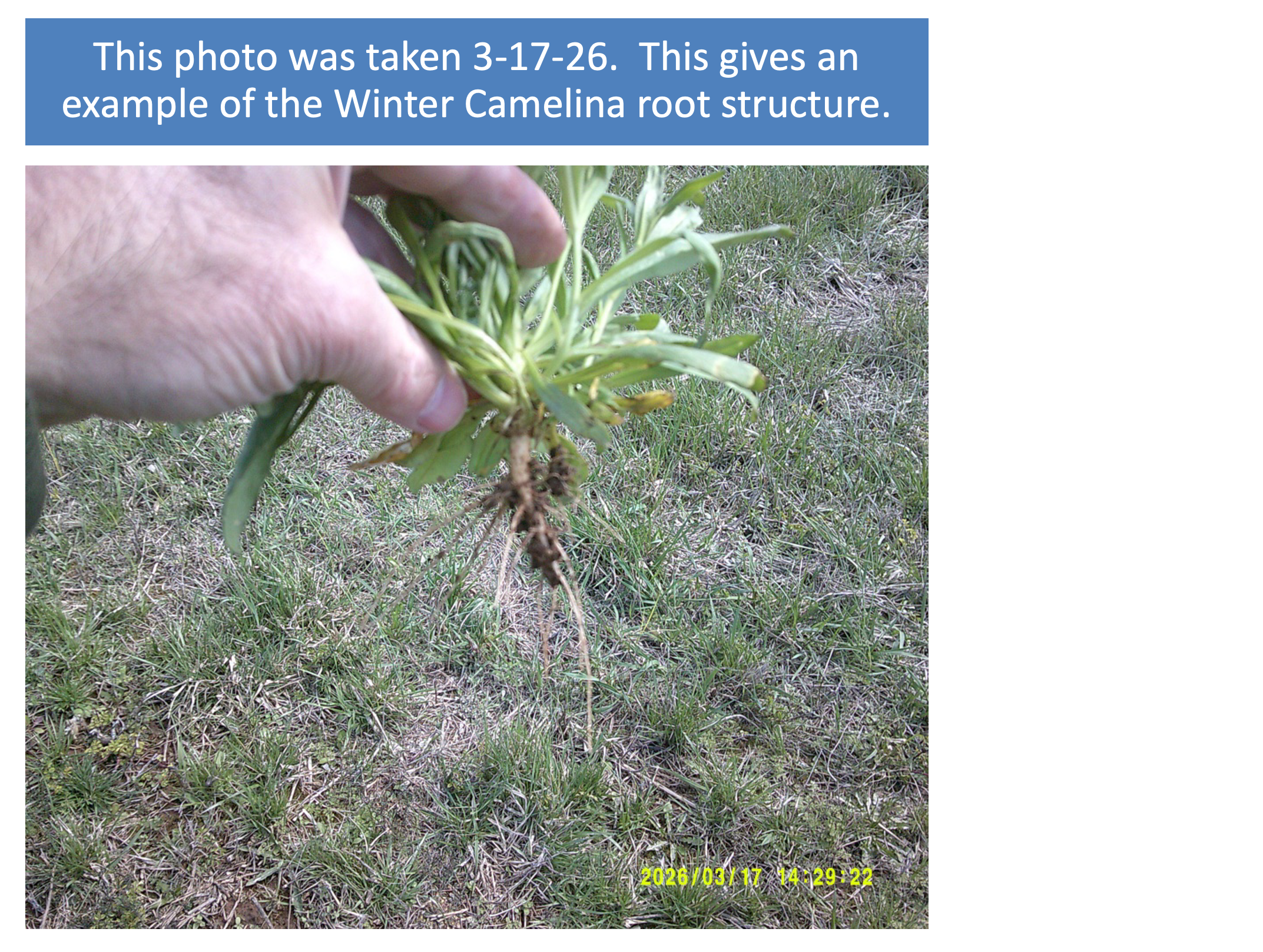
One surprise in the list of cover crop seeds was the Winter Camelina. It was very slow to emerge in the fall and was hardly noticeable until later in the winter. It provided limited ground cover through most of the winter, but began to grow quickly when warmer weather arrived in the spring between February and March. It did not experience winterkill like many of the other broadleaf cover crops. Where it survived, it reached a height of 6-8 inches. The plant forms a broad rosette and has a fibrous root system rather than a single taproot like turnips or brassicas. It did not seem as negatively impacted as some of the other broadleaf species.
A summary list of the cover crop species reviewed along with growth habits and winter survival are listed below.
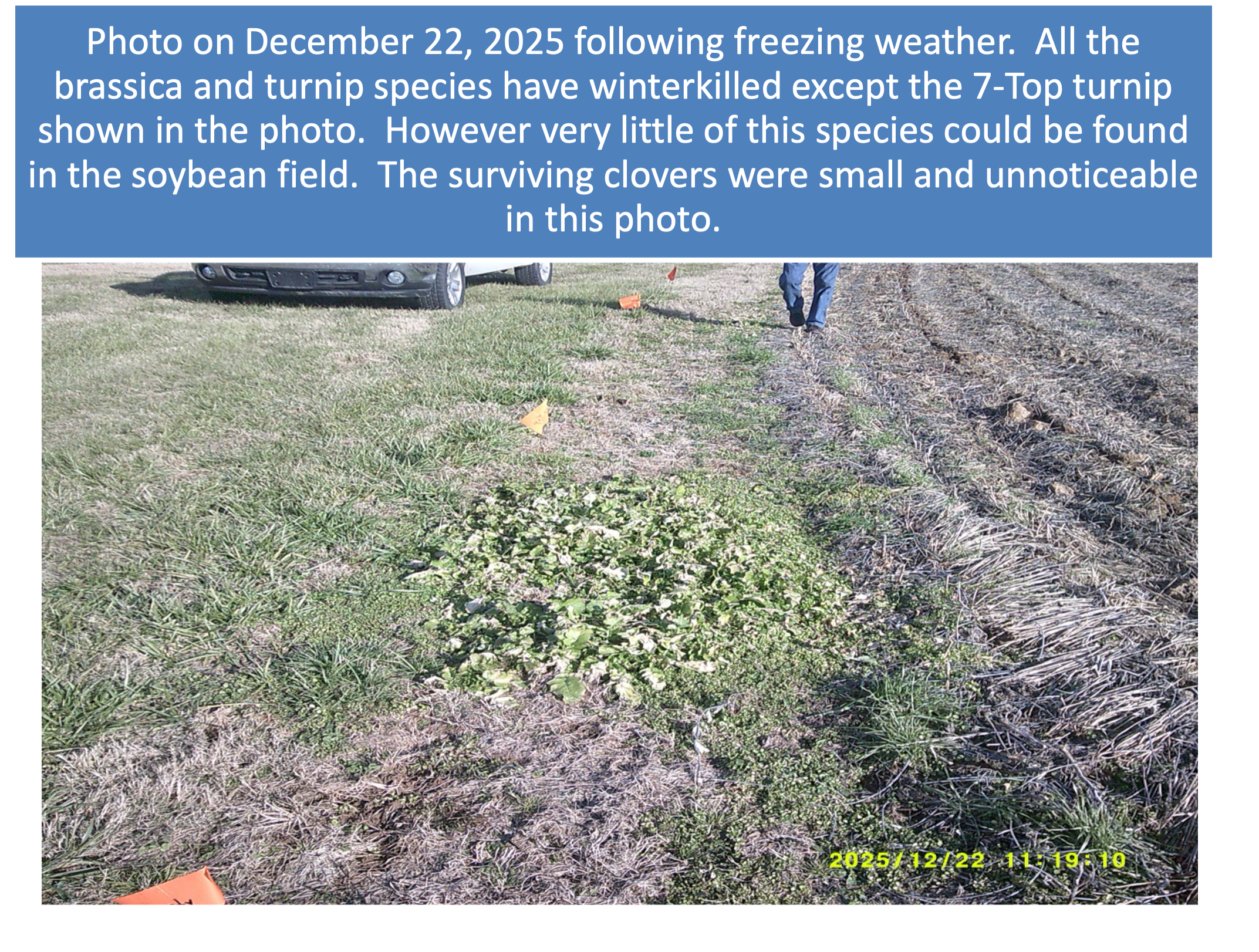
In conclusion, we are still seeking successful broadleaf cover crop species and apparent field conditions to improve the likelihood of a successful cover crop establishment in double-cropped soybeans. Rye and other small grain grasses has been the only species which can consistently be established and grow through the winter when broadcast over standing, double-cropped soybeans. 7-Top Turnip, Winter Camelina, and Crimson Clover show some potential, but the soybean field environment must be modified either with a different herbicide program or different soybean varieties which would allow for earlier seeding dates for consistent success with these species. Cover crop establishment would not be much of a problem in full season soybeans and/or corn where harvest dates are earlier and fields could be seeded by early September. This becomes very challenging with double-cropped soybeans and a late September seeding date.
The original research file can be downloaded here.
The KY Small Grains Promotion Council is proud to sponsor research that covers real-world issues important to Kentucky farmers.