Wheat Varietal Differences in Forage Yield Potential
Wheat Varietal Differences in Forage Yield Potential
Bill Bruening, Department of Plant and Soil Sciences, University of Kentucky, Lexington
Introduction
Wheat is an important source of forage for many Kentucky growers. Approximately 20% of Kentucky’s annual wheat acreage is not harvested for grain, and most of that acreage is utilized for forage production and cover cropping. Wheat has excellent winter grazing and hay/ silage production potential. One advantage of utilizing wheat for silage, green-chop, or hay production is that the crop can be double-cropped with corn or full season soybeans. Additionally, wheat provides a reliable source of quality forage in the spring when other fall/summer sources are low in quantity and/or have deteriorated in quality.
The time to harvest wheat forage is an important decision. A wheat silage crop for dairy forage should be cut at the late boot stage. At this stage the levels of energy, protein content and digestibility are high (similar to corn silage or alfalfa haylage). It is more common in Kentucky to harvest at later stages of development (up to the soft-dough stage). Biomass yields increase throughout the reproductive growth period, but the quality also declines throughout this period. Wheat cut at mid-dough stage produces what is considered average quality hay. Fiber content is higher and digestibility and protein are lower, but dry matter tonnage will be 30-60 % greater than silage cut at the boot stage. It is recommended for palatability purposes that awnless (smooth) head type varieties be used if harvesting at this latter stage.
Objective
To evaluate forage yield potential among wheat varieties.
Methods
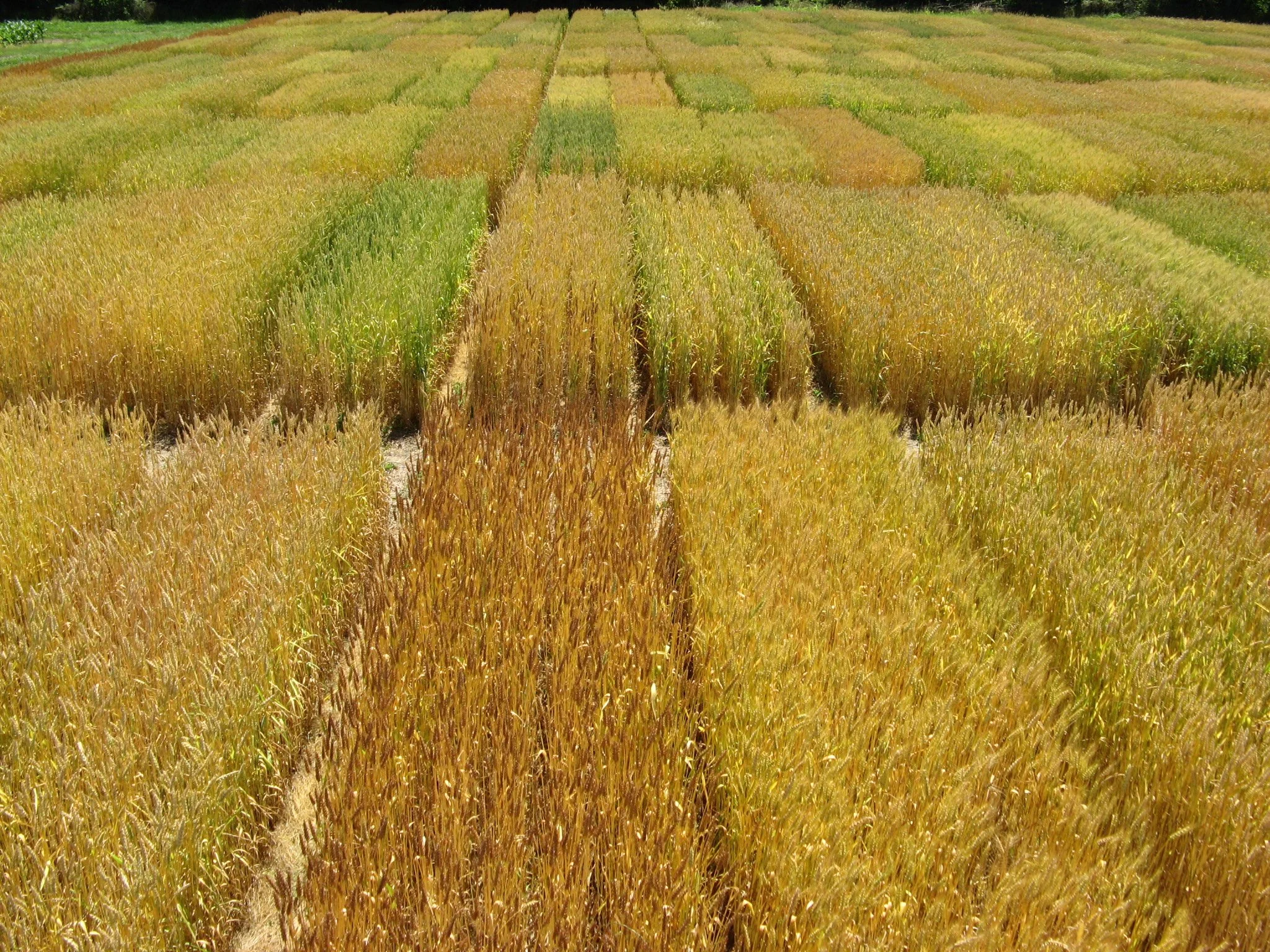
In 2026, seventy wheat variety entries were evaluated for forage yield potential as part of the University of Kentucky small grain variety trials. The trial evaluated forage yields at the milk stage and additionally recorded winter biomass estimates as an indicator of winter grazing / cover crop potential. The test was conducted in Lexington, KY in a randomized complete block design with 4 replicated plots per entry. The trial was planted 10/17/2025 and harvested 5-13-2026. Forage yield results were reported as dry matter tonnage per acre. Winter grazing / cover crop potential was estimated using the Canopeo app on 1-8-2026 to determine the percent ground cover.
Results and Discussion
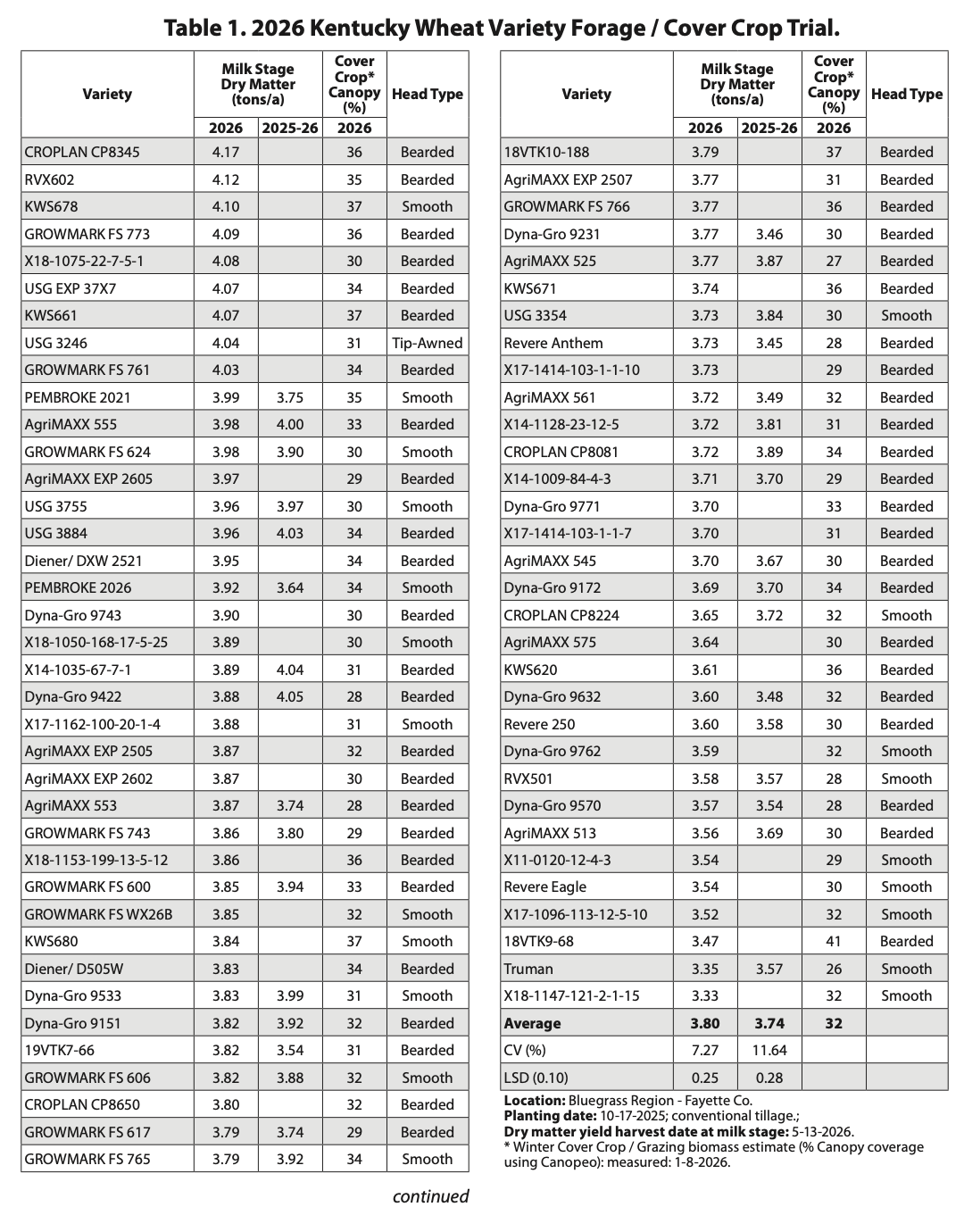
Results (Table 1) indicated that forage dry matter yields at milk stage vary among varieties. Yields ranged from 3.33 to 4.17 tons/acre with an average of 3.80 tons/acre dry matter produced. Differences in winter grazing potential also exist among varieties with ground cover estimates ranging from 27 to 41 %. Head type is also reported, since smooth headed varieties are more palatable than bearded wheat lines. This data allows growers to select wheat varieties to maximize forage yield production potential. The annual results of this trial are available at https://varietytesting.mgcafe.uky.edu/ .
Table
Table 1. 2026 Kentucky Wheat Variety Forage / Cover Crop Trial.
For additional information, contact Bill Bruening - bruening@uky.edu.