Research on managing Fusarium head blight (scab) of wheat and barley with foliar fungicides
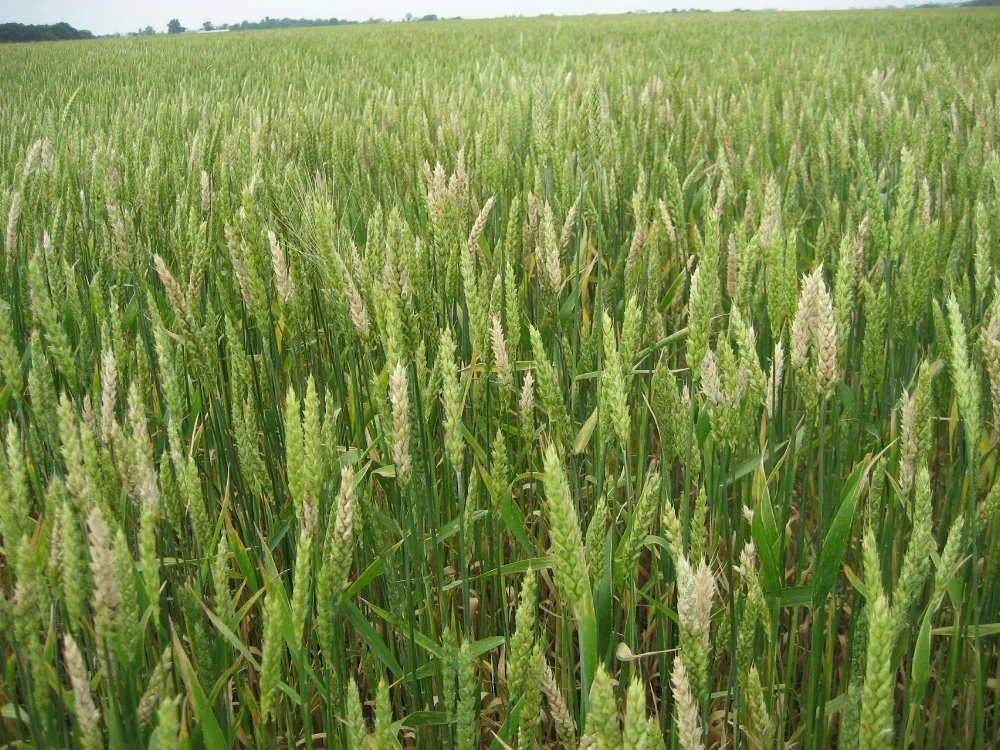
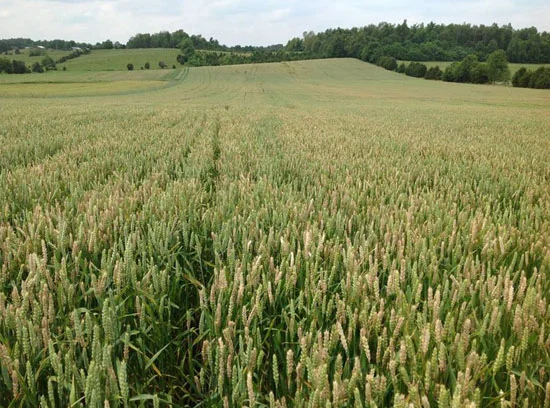
The overall objective of the research trials were to develop the best recommendations for managing Fusarium head blight (FHB; also known as scab) and the associated mycotoxin deoxynivalenol (DON; also known as vomitoxin) with foliar fungicides. The specific objective of each trial differed, and details and results of these trials are provided below.
Read More
Kentucky Small Grain Growers Approve Research Projects for 2018-2019
Ky Small Grain Growers voted to fund the following research and grower education projects last month, for a total investment of $286,441, in the 2018-2019 growing season. That brings the total Kentucky small grain research funding to $3.3 Million over the past 27 years. New projects this year include several focused on Kentucky rye production due to increased interest from local distilleries.
Read More
2018 Kentucky Small Grain Variety Test Results Available
The University of Kentucky Small Grain Variety Testing Program evaluates wheat and barley varieties that are commercially available or may soon be available to farmers. Annual variety performance testing provide farmers, seed producers, extension agents and consultants with current, unbiased information to help them select the varieties best adapted to their locality and individual requirements.
Read More
KySGGA Honors Dr. David Van Sanford
Leadership of the Kentucky Small Grain Growers Association and Promotion Council attended the UK Wheat Field Day on May 8 to honor UK Wheat Breeder Dr. David Van Sanford for his many contributions to Kentucky's wheat industry.
Read More
UK, stakeholders break ground on Grain and Forage Center of Excellence
The center is a testament to the strong working relationship between UK specialists and Western Kentucky farmers with the idea coming from Logan County farmer Don Halcomb (Ky Small Grain Promotion Council Chairman) and Lloyd Murdock, UK extension soils professor emeritus.
Read More
Research Report: Wheat Varietal Differences in Forage Yield Potential
Wheat is an important source of forage for many Kentucky growers. Approximately 20% of Kentucky’s
annual wheat acreage is not harvested for grain, and much of that acreage is utilized for forage production.
Read More
Research Report: Understanding the Genetic Basis of Wheat Development
The objective of this project is to increase our understanding of the genes that affect the vernalization and photoperiod response in wheat.
Read More
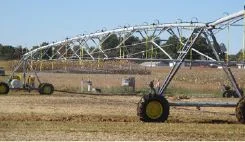
Research Report: Irrigating the Soil to Maximize the Crop
Despite sufficient total annual rainfall in Kentucky, irrigation for efficient crop production and for securing high yields becomes increasingly relevant because draught periods often occur
at times and crop growth stages when the water is needed.
Read More
Research Report: Updating Barley and Rye Management in Kentucky
he boom in distilleries and interest in locally-grown foods has combined to generate much interest in barley and rye for Kentucky. This has resulted in considerable interest from producers on current agronomic management practices for barley and rye.
Read More
Research Report: Reducing Fusarium Head Blight Vomitoxin Levels through Agronomic Practices
Every year, vomitoxin levels caused by Fusarium graminearum, in soft red winter wheat are of major concern to wheat producers and millers. Current agronomic practices to reduce vomitoxin levels include planting moderately resistant wheat cultivars and fungicide applications at Feekes 10.5.1.
Read More
Research Report: Looking for Old and New Foes to Prevent BYDV Transmission on Wheat
This objectives of this project were to monitor the abundance of aphid species and viruses in the fall 2016 and spring 2017 in research plots of Princeton; survey for presence of new invasive Sipha maydis in several regions of Western KY, and collect samples for virus detection; and to evaluate insecticide treatments for aphid management and BYDV’s percentages in treatments.
Read More
Research Report: Management Fusarium head blight (scab) of wheat and barley with foliar fungicides
The overall objective of the research trials were to develop the best recommendations for managing Fusarium head blight (FHB; also known as scab) and the associated mycotoxin deoxynivalenol (DON; also known as vomitoxin) with foliar fungicides.
Read More
Research Report: Improvement and Development of Barley for Use in Feed, Malt, and Fuel
The Virginia Tech barley-breeding program is the largest and until recently was the only remaining public program in the eastern United States. The barley program is significantly diverse with breeding efforts focused on the development of superior, widely adapted, high yielding winter barley cultivars and a major focus on the incorporation of value-added traits geared towards the development of new markets.
Read More
Research Report: Enhanced Chia Production & Product Usage
Work conducted at University of Kentucky and also by Chris Kummer has indicated that chia, Salvia hispanica, has the potential to be an economically viable new crop for Kentucky farmers, but agronomic improvements and/or additional product markets are needed.
Read More
Research Report: Can Wheat Yield and Grain Fill Duration be Increased by Decreasing Wheat Canopy Temperature?
In 2016, the irrigation system was calibrated and wheat was established that fall to examine the effect of wheat canopy temperature on final grain yield in 2017 growing season.
Read More
Dissolving the Soil Fragipan could Grow Kentucky Farmer Income by $0.5 Billion Annually
With these limited results, it appears that it might be possible to increase yields of corn and soybeans by 25% on the fragipan soils by using an annual ryegrass cover crop. We also expect to improve the yields of wheat. A 25% increase would result in $500,000,000 in increased returns to Kentucky producers per year or $5,000,000,000 over a 10-year period on the 1.5 million acres of cropable fragipan soils in Kentucky.
Read More
Kentucky Small Grain Growers invest $785,000 in UK Grain and Forage Center for Excellence and related research
The Kentucky Small Grain Growers Association Board and Promotion Council voted this month to invest $250,000 in new graduate housing for the University of Kentucky Grain and Forage Center for Excellence and an additional $290,000 in UK grain-related research projects. KySGGA’s contribution to the Center since fundraising began in November 2015 totals $785,000. This amount will be added to the Center’s goal of raising $15 million to be matched by the Kentucky Agricultural Development Fund.
Read More
2017 Kentucky Small Grain Variety Test Results Available
The University of Kentucky Small Grain Variety Testing Program evaluates wheat and barley varieties that are commercially available or may soon be available to farmers. Annual variety performance testing provide farmers, seed producers, extension agents and consultants with current, unbiased information to help them select the varieties best adapted to their locality and individual requirements.
Read More
Growing Results: 25 Years of Research
As I write this, it’s raining and concerns of the March freeze, rust and other wheat issues are on my mind, but it also gives me time to reflect on how far the Kentucky’s small grain industry has come.
Read More